Tuesday, June 28, 2016

"Onward! We Journey Forth!" (Honeymoon Edition, Pt. 2)


So, when we last we left our couple, they were enjoying relaxing days in the sunny streets of Prague. But the adventure was about to shift into high gear...


So, after the most pleasant puddle jump flight either of us have ever experienced, we landed in Hungary. Again, not much planning had been done up to this point, but shout out to P.A. and my other friends who have been to Budapest for their suggestions and ideas. The first night, after we got off the plane, we just sat in the hotel and laid our strategy. That is, after sampling the signature dish of Hungary, chicken paprikash. Believe me, if you like sour cream or paprika, Hungary is the place for you. Shout out to the Budapest City Break for creating a tourist map with splendid routes for self-guided walking tours of the city's sites - you da real MVP of this trip. 
Our well-used tourist map
Our first full day in Hungary, we realized we were on the Buda side and much of what we wanted to see was in Pest (Buda and Pest being the two sides of the city divided by the Danube River, and united by 6 bridges and a love for sour cream). Still, we took our first walk across the famous Chain Bridge and immediately were taken by the gorgeous buildings. Prague had a lot of great architecture, but Budapest celebrates its historic buildings and bridges and other infrastructure in a much more intense way. As Reptar put it, "Even their manhole covers are pretty!"


(Interesting fact about the Chain Bridge: According to legend, the architect who designed it proclaimed that if someone found a flaw with it, he would commit suicide. And of course, an intern - or whatever the 19th century equivalent of an architectural intern was - piped up and pointed out that the lions have no tongues. The architect didn't commit suicide...although he did die not long after. Also...apparently the lions do have tongues.) 

After crossing the bridge, we found the gorgeous Parliament building and its lovely gardens, and were introduced to the word lapidarium - "place where stone monuments and fragments of archaeological interest are exhibited." It's actually way more interesting than it sounds, and some of the history was actually quite engrossing. Well, for me, at least. Reptar deigned not to spend quite as much time examining the pieces.
Later we would walk Vaci Street and its many boutiques, merchants, and all other matter of shopping. As you can imagine, there aren't a whole lot of Indians in Budapest at any given time, so Reptar and I got a few stares here and there, but more importantly, we were magnets for restaurateurs and store employees looking to sell their wares. One girl walked up and immediately asked, "India?" We simply nodded, unsure of what else to say. 
"Oh, India, great! So for you...Saabon? Saabon?" She offered us two small translucent rectangular prisms, one bright blue and one bright yellow. We each picked one up and stared at each other, and then I asked the question that was on both of our minds.
"Do we eat it?"

"No!" the girl replied, "It's saabon!" At our continued blank stares, she finally understood. "So...I speak more Hindi than you both do?"
Turns out, saabon is the Hindi word for soap. She was selling us Dead Sea soap. Reptar loved the soap. It made her skin feel smooth and tingly. 

I hated it. Stupid dead sea soap. We actually took a detour so I could find a bathroom and wash it off my hands.

But it was made up for by going to St. Stephen's Basilica and witnessing one of their weekly organ concerts. I mean, I know I talked about cathedral concerts in Part 1 of this post, but I had no idea. I thought I knew how beautiful music could sound in a huge church. But the organist at St. Stephen's Basilica took his throne and blew the doors off the place. I think his rendition of Bach's Toccata and Fugue in D minor actually punched me in the face. Or at least the ear drums. I was floored by the beauty of both the cathedral and the music.

Day 2 was...well, it was a pretty far walk. I've had to apologize and/or humorously confess to this a few times now, so I may as well state it here for the record: I kept telling Reptar (not falsely, as I was convinced of it myself), that we were walking about 2-3 miles a day, despite her protests. We later looked at it on Google Maps...we were walking close to 8-9 miles a day. So, as is bound to happen so many times in the near and far future, my wife was correct and I was not.
Of course, if she'd listened to my advice and worn sneakers instead of sandals, her feet, legs, and back would not have ached quite as much.

Anyway, we walked to the Balna, or "The Whale" - a uniquely-shaped shopping center with interesting restaurants and a delicious lamb burger in one of its restaurants. From there it was off to the Zwack Museum, where they distill the Hungarian answer to Jagermeister known as Unicum, as well as host the largest collection of mini-bottles of liquor (17,000!) in Central Europe. Fun fact: Peter Zwack once came to Buffalo as an ambassador - they have a letter of praise signed by Mayor Byron Brown, as well as Bills and Buffalo memorabilia in a display case. Pretty cool!

Later that night we went on a beautiful evening dinner cruise along the Danube. The food was delicious, the wine was lovely, the view was gorgeous. The one thing I would change is that we should have taken the 10 PM cruise - it's even prettier at night.
That's the single biggest difference between Prague and Budapest. Budapest has a significant nightlife. In Prague, there were a few restaurants and bars open late, including that jazz club we enjoyed on our last night there. And I'm sure there was more, too, but it seemed like by 10:00 PM or so, things were wrapping up. In Budapest, on the other hand, it seemed more like the lights were still up, people were still out in droves, and more was happening. Even the street musicians and buskers were out later (which is why I also own a CD from a Hungarian group...although it's mostly instrumental smooth rock covers of American songs, it's not bad).
On Day 3, we decided to stay on the Buda side of Budapest. The Castle District is truly beautiful, with its gorgeous scenery views and intensely beautiful architecture. The history seemed to flow out of each building and mountain. The biggest treat for two fledgling physicians was getting to see the Hospital in the Rock, an underground medical facility that served both as hospital and neutral sanctuary for victims of the war-ravaged and under-siege Budapest during WWII. Later we enjoyed the Museum of Military History (well, we raced through the exhibit because it seemed like they were basically closing each wing for the night right after we finished seeing it). We finished off the day by finding out that jazz clubs in Budapest fill to capacity much faster than clubs in Prague, but we enjoyed some amateur blues musicians instead and Reptar re-discovered that she is a major fan of tiramisu. Finally, again on P.A.'s advice, we headed to the Ruin Pub Szimplakert - unsure of what to expect on a Wednesday night, but instead finding a cool vibe, good beer, and some really intricate graffiti. 
On our last full day, we checked out the artsy district of Andrassy Avenue, finding the opera House and several rehearsal spaces that brought back pleasant memories of college when I played drums for modern dancers in similar rooms. The House of Terror Museum brought home (and brought it hard) the devastation the Nazi Party and the Soviet Regime caused to Hungarians. Heroes Square, City Park Lake, and Vajdahunyad Castle rounded out the trip, and then it was time to pack and collapse.

Notes on the trip home: Budapest airport was ridiculous. I have never seen a more disorganized check-in area. Rope lines are useful for a reason, Budapest Airport. Other than that, it was quite pleasant.
And how did we finish off our incredible honeymoon adventure?

We got home and, for our first meal in the USA, had Chipotle. It was delicious. NOM NOM.

Thursday, June 9, 2016

10 Days Off the Island (a.k.a Honeymoon Edition, Part 1)

"So...I'm married now. That's pretty cool." -Me, Tweeting 5/28/2016

I know it's lame to quote yourself, and ordinarily I would never do it...but that's still a pretty amazing thought to me. Fiancée Reptar has evolved into Wife Reptar, and if anything she looks more beautiful than before. Things are roughly the same as before...but something feels different.
But anyway, enough of the sentimental stuff. Or "senti", as my cousin (and Deacon at my wedding) Josh puts it. We took off for our honeymoon, a much-needed 10-day vacation to end my intern year and start Reptar's. After an 8-hour flight, Wife Reptar and I landed in Prague with the typical "Um...what do we do now?" expression on our faces. So...

We took a nap.

From the Charles Bridge
Later we explored some of the surrounding areas, and to show you how little research we had done prior to the trip, at one point we crossed a bridge with a ton of statues depicting various scenes of religious strife and major figures. It was crowded, nearly choked with tourists gawking at the statues, peddlers hawking their wares, and caricature artists creating hilarious art, all the way across. At the end of the walkway, Reptar turned and asked, "Joe, was that the Charles Bridge? The big tourist landmark everyone told us to check out?" As it turned out, it was. Almost missed the significance, there. 

We also immediately discovered the Czech Republic's rich artistic culture. Obviously the architecture is immediately breathtaking, as visible in any photo or painting of Prague. But beyond that, in nearly every cathedral or church or other other venue, almost nightly they have classical music performances. Have you ever heard Vivaldi or Dvorak as performed by string quartet+organ combo? Toss a rock in Prague and you can hit a performance. It's beautiful. More on music later.
We also realized that we had timed our trip perfectly with the Prague Fringe Festival! Amazing performers from all over Europe had arrived to show off their talents. The first night itself we caught a one-woman show of Richard III, one of my favorite Shakespearean plays. Soon to become one of Reptar's(?). Later in the week we would catch the hilarious improv group Men with Coconuts, as well as the Who Dares Twins, a musical stand-up act featuring two twin brothers, and at the end of the week we would be taken along on an acid trip in story form, simply titled "Tiger," and be read (disappointingly) by the Singing Psychic, an act which should really just be called "A British Woman Puts on an Eastern European Accent and Shows Off Her Singing Talent by Looking Up (In a Book) and Then Singing Top 40 Hits from the Week You Were Born."
The peeing statues

Our second day of the trip was probably the most memorable, as it started off with us setting an alarm for 8:30 and not actually waking up until...1:00 PM. Whoops. Still, we wasted no time in getting lunch and then headed to the KGB Museum. If you're ever in Prague, I highly suggest this (thank you Foursquare app for suggesting it to us!). The owner is clearly waiting for Putin to call him and initiate a new Soviet Union by taking the Czech Republic back into Russian hands. He also may have a bit of a cocaine habit fueling his Russian pride. But he will give you an excellent and animated tour of his little museum, pointing out and demonstrating the function of various Russian weaponry, communications, and spy equipment and using it to provide historical context as he takes you through the history of the KGB from pre-WWI up to the end of WWII and beyond. The whole thing was really intriguing and educational (if biased)...but he was weird. 
The other great museum is that of Franz Kafka. If you have even a passing familiarity with his work, or any interest in a man whose writing shapes our interpretation both of life and of history, you should definitely go here. The creepy yet enticing exhibit takes you through his life and thinking process, and you really get a sense of knowing the man a tiny bit better (if only a tiny bit).
St. Vitus Cathedral

Reptar and I prided ourselves on not using the tour group thing and just discovering the city and its history on our own. But one tourist trap you absolutely should fall into is Prague Castle. The basic ticket package consists of the four main attractions - St. Vitus Cathedral, St. George's Basilica, Old Royal Palace, Golden Lane. I have never seen Reptar display as much wonderment as when we walked through the awe-inspiring St. Vitus Cathedral, with its brilliantly detailed stained-glass windows and its incredible architecture, and the sheer ethereal quality to the air that made you feel like you were truly in God's presence. Later, we would encounter the camaraderie of our profession in a cafe after the Castle. Reptar's American Medical Student Association sweatshirt prompted a pathologist and her reproductive endocrinologist husband to introduce themselves, wish us congratulations, and pass on both career and marital advice, as well as suggestions for leg 2 of our trip, Budapest. 

And they had Starbucks
Of course, no travel post would be complete without food. Czech food is heavy on the meats and carbs. Reptar and I quickly found our favorite dish to be goulash, a far cry from the pasta-and-ground beef combo of American goulash, but rather delicious chunks of spiced beef in a sauce reminiscent of (but not as flavorful or spicy as) an Indian curry, with bread dumplings that would have been tasty enough on their own. This can be found in any Czech restaurant, but our clear favorite was a quaint little mom-and-pop eatery in Old Town named U Modrého Hroznu. We might go back to Prague sometime just to eat at that place again.
The amazing hot chocolate
I drank a beer with every non-breakfast meal, which was pretty standard (the Pilsener was first brewed in the Czech Republic, so that's what is found pretty much everywhere - it would take some doing to find a good dark beer to suit my tastes). They appear to drink more beer than water (which comes only in bottles and costs extra) in Prague, much to Reptar's beer-aversive chagrin.
In the cafe with the two physicians we would encounter the terrific combination of Schnitzel+strudel, as well as Prague's infamous delicious spoon-required hot chocolate. Later we wandered through a wine festival with some of the best chocolate cheesecake I have ever encountered. But no trip to Prague is complete without the cinnamon sugar-coated dough spiral known as Trdelnik, now sometimes paired with flavored gelato for a truly delicious cold treat.
And, of course, it wouldn't be me without some music. In addition to the aforementioned classical music, the wine festival featured an impressive jazz quartet of guitar, accordion, banjo, and double bass, putting a delightful Eastern Europe spin on classics like "The Girl From Ipanema" and "On Green Dolphin Street." And on our last night we descended into one of the established jazz clubs in the area and took in the mighty Jan Kofenik and the GrooveKeepers, of whom I've never heard, but they were a tight little organ jazz quintet that brought the house down for their CD release party. That's right, I own a CD of a Czech jazz group now.

Overall, an amazing trip. And it's the only the first half! Now we're off to Budapest for the second leg. Maybe I'll let Reptar talk in the next post. Or at least talk about her a little more.


Yay, Trdelnik!

Saturday, January 30, 2016

Music Heard on the Island, 2015 Edition

So my last couple of posts got pretty heavy, so let's change it up to something a bit more lighthearted.
2015 was a cool year in music. I liked a lot of what happened last year. Of course, there was some crap, but it seemed like I saw less of it then I did in 2014. Heck, 2015 was the year Justin Bieber finally became somewhat acceptable listening material. That in and of itself was enough to sit up and take notice of the musical year.

2015 saw a lot of great music, and sadly I missed a lot of it. I heard snatches here and there - Chris Stapleton's appearance on SNL left me wanting more, and the Chris Cornell and Sara Bareilles features on Zac Brown Band's new Jekyll+Hyde intrigued me. I still have yet to get to those albums.
2015 was also the year of the comeback. Shania Twain released a live album? Natalie Imbruglia finally stopped feeling "Torn"and released new music? Howie Day still exists and is making music? I didn't listen to any of them, but it's interesting that they came back (see below for more).
And there were a bunch of albums that I listened to in 2015 that, on looking them, actually came out in 2014, or even 2013. Son Little is an excellent modern blues album that caught my attention with the return of Spotify's "Discover Weekly" feature. Vance Joy's "Riptide" pulled me in (get it?), but that album came out last year, too. Whoops.

Anyway, onto albums that actually came out in 2015 and that I did listen to:

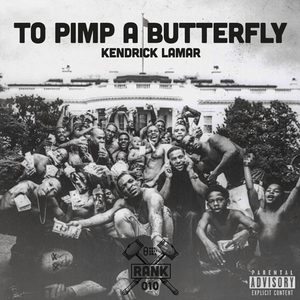
1. Kendrick Lamar - To Pimp A Butterfly: In March, the Billboard charts were swimming in the sludge that was Meghan Trainor's "Title", struggling to stay afloat with Fall Out Boy, Ne-Yo, and the remaining singles from Mark Ronson's "Uptown Special", none of which were making us dance in the street (RIP David Bowie) the way Uptown Funk did. Meanwhile, people who know more about rap than I do were abuzz with discussion of an impending new album from Kendrick Lamar. Then near the Ides of March, "King Kunta" threw open the pop-culture doors and drop-kicked Meghan Trainor across the room. I think Australian comedian Felicity Ward put it best when she Tweeted:


The rest of the album is amazing, but very differently so. It gets heavy. It's an intense 78 minutes that delves deep into racism in our country, and it takes a couple of listens before it can fully sink in. But it is a beautiful album. One of the coolest parts is that most of the album features live musicians creating the musical canvas on which Kendrick paints his words.  My friend Jon Lehning, a working jazz saxophonist, points out that TPAB is as much jazz as it is rap in some places. I fell in love with it instantly. Check out this video of a live performance.

2. Gavin Harrison - Cheating the Polygraph. I have been a longtime fan of the band Porcupine Tree. It started with, as many of my musical discoveries start, with an interview in Modern Drummer that introduced me to this master of making intricate drumming chops blend into the music so you barely notice. Harrison creates beats at times that I can often only begin to guess at, much less try to imitate. Here he takes Porcupine Tree songs and filters them through big band arrangements, molding them from progressive hard rock into a beautiful bop jazz, while maintaining their progressive sensibilities. The result is a mix of guess-the-PT-song as you enjoy the awesome layers of horns and woodwinds breathing new life into the tunes. The album goes by pretty quickly, but it's a fun ride for jazz fans and PT lovers alike. A Sampler Montage.

3. Chris Cornell - Higher Truth: Chris Cornell's new album pre-order emerged right as I was starting to get the itch for new music in October of last year. Soundgarden had put out a new album and tour the previous year, and Cornell had announced he was doing another solo project this year. His previous solo albums have seen mild success, with the melodic alt-rock of Euphoria Morning and Carry On, contrasted with the Timbaland-produced Scream, an album that fused Cornell's voice with hip-hop beats and made Cornell fans everywhere seriously question one of the greatest voices in rock. Higher Truth takes a more stripped-down approach and lays it all on the songwriting. And it absolutely does not disappoint. It balances an acoustic folk aesthetic with heartfelt rock-out moments (lead single Nearly Forgot My Broken Heart displays this perfectly). The songs on this album let Cornell's voice shine, as the pain, sorrow, or hope of the forlorn lyrics cuts into your soul. Definitely one of my favorites. Arguable best moment: "Murderer of Blue Skies" which starts as a quietly intense folk+electronica rhythm and suddenly bursts forth with an electric guitar and crashing drum beat, one of the album's best cathartic moments. 

4. Zella Day - Kicker: I actually forgot about this album until I went to make this list. Spotify brought back its "Discover Weekly" feature (I guess it used to be called something else, my sister was telling me - she was over the moon when it came back). One of my playlists featured the song "Ace of Hearts." I was immediately floored as Zella Day's forlorn voice cut into my soul over the slick slow 6/8 beat. I went to check the rest of the album out and Mustang Kids immediately had me dancing, having fun with the same theme that Halsey's "New Americana" tried to use later in the year (and not nearly as well). The album features a lot of emotion, but it's channeled through some beautiful lyrical imagery and fantastic layered beats and soundscapes.


The next one is not one I actually heard in 2015, but I was strapped for another selection that really captured my heart. On review of albums that came out last year in anticipation of this playlist, I came across this and was pretty much immediately sold:

5. The Corrs - White Light: I know what you're thinking. The most beloved Irish family band of the late '90s and early 2000s has returned? Okay, maybe you're not thinking that, because if you're like most of the population of the United States, the last (and possibly only) time you ever heard The Corrs was 2000's "Breathless," and that's only if you saw The Corrs Live in Dublin DVD, or heard it in that Debra Messing movie "The Wedding Date." Well, they made 2 albums after that, the last one in 2004, and then lead vocalist Andrea Corr struck out on her own for a bit. Apparently in recent years, drummer Caroline got the band back together, and they went into the studio under the radar. The result is an album that seems to pick up right where they left off in 2004. The first single, "Bring On The Night," features the same dance-pop vibe  that kept "Breathless" in your head for days, with a resilient hope that makes you want to sing along and then go fight a dragon. The rest of the album continues the Corrs' tradition of balancing pop sensibilities with traditional Irish songwriting and instrumentation - the tin whistle, bodhran, and violin blend so well with guitar, keyboards, and drums. They didn't necessarily break much new ground, but after 11 years, this is exactly what Corrs fans want. 


Honorable Mentions:
Kamasi Washington - The Epic. If you like the instruments and stylings you heard in TPAB above, check this out. Washington provides the saxophone flavor on the album. My closest musicophilic compadre Eric suggested it to me, and similar to TPAB, I was instantly hooked.
Brian Wilson - No Pier Pressure. I've been expecting this album since this video came out. And it does not disappoint. Wilson hearkens back to Pet Sounds with the same Beach Boy-style harmonies and sonic textures that we've loved for years.
Def Leppard - Def Leppard. Another comeback album, DL releases an album of new material that manages to cull together all the best parts of their music over the years. "Wings of an Angel" is one of my new belt-out-in-the-car anthems.
Toto - Toto XIV. This was a great album, but, while Joseph Williams may be a technically better singer, and the years have been good to him and his voice, I miss Bobby Kimball's over-the-top vocals, the desperate wails and angry growls of his mighty choruses.  On the whole, a good album...I just wasn't satisfied on a visceral level.

Monday, January 11, 2016

Happy New Year! Let's Talk About Death

I've been thinking a lot about death lately.

Admittedly, I do work in hospitals. Plenty of sick patients, and, as they say in Scrubs, sometimes it seems like Death is just another coworker. A coworker we fight against and do our best to foil every day, at every turn.
Recently on the floors, they called a rapid response when a patient displayed seizure activity. I arrived at the scene and heard the story from the witnesses, and got ready to turn the patient on his side in case he vomited. AK, one of my residents, arrived right on my heels, looked at the patient and asked me if the patient had a pulse.

He did not.

I turned him on to his back. She told me to start compressions, which I promptly did. My other resident arrived and he and AK ran the code. I did what I was told, helping to perform chest compressions while another team member breathed for him and another team member drew up medications. We performed CPR until the Zoll monitor told us it was time to shock him. After two shocks, we were able to successfully resuscitate the patient, took him straight to the ER, and from there he went to the cardiac catheterization lab. A couple of days later I saw him in a hospital room, recovering.
He looked awesome. He was relaxed, breathing easily, and did not look at all like the choking, gasping, swollen man I saw on the floor that day.
That's one of those times when it seems amazing, what we can do. We brought a man back to life. And he walked out of the hospital and will go on to live his life. Take that, Death. Checkmate (for this round).

On the other hand, I remember all too well the first time I watched someone die. It was in the emergency room. I was working a night shift during my last month as a third-year medical student. I had just done my tenth rectal exam that week, and was settling in for what I was hoping would be an interesting shift. Well, I got that and then some. She was 93 years old, African American, with several comorbidities. She came in with shortness of breath, and the rest was a blur. She could not maintain her oxygen saturations, but her pre-written advanced directive orders did not allow for transfer to higher level of care. We could not intubate her to give her more oxygen, and more importantly, she did not want us to do that. I don't remember what nursing home she came from, or even what her name was. I remember being told to take her blood pressure, and asking her how she felt. All she did was smile at me. A wan, accepting smile that was weighed down by pain, an inability to oxygenate, and 93 years of life experience. A wry, humble smile that was matched by the dim light in her eyes - a smile that will remain with me for a long, long time. She gave me that smile, and I had no idea what to say to her. All I could do was smile weakly back, and give my best reassuring grip of her hand. That grip of mine, while not the strongest or the largest of hands, usually serves to reassure patients that I'm doing my best for them and that I'm working hard to get them better. But in her hand...to be honest, I am not sure who was reassuring whom: The medical student who was doing his best to feign calm, or the elderly lady who was ready to face the next world. Soon her breathing became more labored, and the nurse came to tell us. My attending beckoned me along and we ordered a narcotic pain medication to ease her work of breathing. She got drowsier, and then we just stood there as she breathed her last. Her breathing stopped, her heart soon joined it, and that dim light in her eyes finally dimmed to nothing.
The hardest part was then, we had to just move on. There were other patients that required more immediate assistance, and we couldn't afford to dwell on it at the time.

I recently started listening to The House of God on audiobook. It's my second time with the book, the first time being a read-through in my third year of medical school (shortly before that ER shift), not to mention my repeated viewings of Scrubs, which is loosely based on some of the book's satirical concepts. An OB/GYN attending I once worked with told me I should read the book three times - as a medical student, again as an intern, and again after completing residency. In the first chapter of the book, the chief of medicine illustrates the hospital's mission statement of "doing everything always for everyone forever to keep the patient alive." A lot has changed since 1978, and that policy is not the end-all, be-all it used to be. Now, a part of nearly every History & Physical we interns write is a conversation about what the patient's end-of-life wishes are. Well, it's supposed to be a part of that H&P. Such conversations are uncomfortable for both the physician and the patient, and we often do not like having them. Or, as a palliative care attending I know will tell you, "too many doctors are afraid to have that conversation, or even say the word 'die.'"
Every palliative care specialist will tell you that having that conversation is not, as The House of God states so flippantly, "Getting the DNR." It's about knowing the patient and what they want. How they feel about the end of their life, whether it's coming soon or decades away. It's like getting consent for any other procedure - it's explaining the risks and benefits of cardiopulmonary resuscitation and intubation. And it's about respecting the patient's wishes once they make their informed decision. That doesn't make it any easier to talk about, though.

You know what I remember most about that code? The dull, sickening crunch of the patient's ribs breaking with that first compression. It's a sound I have heard multiple times in codes and, to break any illusion of eloquence, it freaking sucks. We may joke about it, but it's a terrible sound. And granted, sometimes it's a small sacrifice to make to restart the patient's heart. And in this case, he was a young enough guy that he recovered quickly. But sometimes...that's not the case. Sometimes those broken ribs just compound the fact that the patient's heart was only barely resuscitated, and he/she/they cannot be weaned off the ventilator. Sometimes it's that they required CPR and multiple shocks for so long that they suffered anoxic brain injury because we could not get the blood pumped to the brain in time, and for the rest of their lives, they will be unable to tell us anything about their thoughts or wishes.

When someone decides to become a physician, he/she usually does not consider this part. We become doctors "because we want to help people" but in our heads that is often synonymous with saving lives. With performing "heroic measures" to bring patients back from the dead, and watching them walk out of the hospital. Never once do we think about the other side of it. About what to do when people don't want those measures. About how to talk to a family about letting their relative go because he/she just cannot fight anymore, or how to accept that a patient wants to die with dignity and on their own terms rather than facing the possible adverse consequences of our so-called "heroic measures." Because we don't always want to think about that. We imagine the oft-used, "if it was my mother or father" scenario to help us counsel the patients...but in this case, that thought often terrifies us. We can bring ourselves to deal with patient deaths, and shrug those off, but when it comes to our own family, we often feel powerless. All of our medical insight and education becomes clouded as we find ourselves on the patient side. Even in our imaginations.
And that's when we question ourselves. We can't help but wonder if it is worth it (in these particular cases). Are our "heroic measures" there to protect the patient from death, or to protect us, the physicians, from having to deal with death?

The one-line answer is that there's a balance between the two sides of that sentence. 

But there is no easy way to find that balance, nor is there a universal way. But if we as doctors truly want to be the best physicians we can be (and, if that aforementioned palliative care attending has her druthers) - for the sake of the patients - we will never stop trying to find that balance.

Monday, October 26, 2015

Overnight Shift Introspection

Welcome to month 4!
At the end of my first month of residency, I wrote this entry about the daily thoughts of a new intern. #5 of the points I made in that post talked about how medicine is invading my subconscious, and how I kept dreaming about the hospital every night. I hoped that would be a temporary thing. In month #2, I went to the proving ground that is the intensive care unit, where I continued to have nightmares for the first week...but by week 2 or so, they had stopped. I thought I was free, that I had passed that stage. But then I went back to the regular floor medicine for month 3 and the nightmares started up again. I shouldn't say nightmares...not all of them were scary. But I hear nurses' voices and bed alarms in my sleep, and sometimes I dream about patients having certain conditions or illnesses and then when I wake up in the morning, I find myself trying to form a treatment plan in the shower to address a problem that doesn't actually exist. 

I know I'm not alone in this. I've talked to multiple other interns that are in similar situations. One has suffered weekly (if not nightly) insomnia from the pressures of medicine compounding her own (self-admitted) neurotic personality. Another intern finds himself facing a bitter slow-burning rage every time he feels unprepared for something or something goes wrong with a patient (even if it's not his fault). And I myself had to learn how to become less tightly wound - from overreacting to every little thing (and swearing like a sailor while I did it) to responding more often with, "Okay, here's what we can do." I'm still learning that - balancing knee-jerk reactions with careful thought and consideration of the patient's overall condition.

Every year there are new articles around this time about intern depression. Suicide rates are high among new physicians, frustrations with work schedules and work-hour restrictions are consistently present, and burnout seems to come frequently no matter what countermeasures are taken. It's only month 4, so we aren't quite there yet, but it's something we've been seriously warned about. Especially the fact that doctors make the worst patients, and we're terrible about speaking up about or going to see someone for our mental health symptoms. And recently I noticed that some of my fellow residents were having a gripe session (just venting because we needed to) and I noticed some of the medical students looking on, and I could read their expressions. "This sounds terrible. Are we going into the right field?" And I told them this:

Sure, there are times when we get frustrated or look longingly at people with normal jobs. There are days when I would love to wake up and suddenly realize I would rather work a 9-5 job, in some office doing equally important but less demanding work, where I get to clock out and go to a happy hour and have weekends off. But I can't do that.
I freaking love this job. I may not always want to get out of bed, but by the time I get to work, I'm excited to see what my patients are doing and if they are okay, and if not, what I can do for them...even as it frustrates me when they don't get better. I am fascinated, as my fellow interns and residents all are, by the disease processes we see in our patients, and how complicated it sometimes is to find the right treatment regimen. And I know that part is not just a phase, because I see third-years who are getting ready to graduate and have seen quite a bit during their residencies, but when I tell them about an interesting case I saw, their ears perk up and they're just as excited and interested as I am.

I mean, don't get me wrong. We all treasure our days off. We love the days when we get to go out and enjoy the sunlight (or see the sun at all), and go drinking with our friends or apple-picking with our spouses/significant others. I spent a recent Saturday doing utterly mundane things with Fiancee Reptar and it was awesome. And we love the nights where we DON'T dream about the hospital (seriously, one night I had a dream where I saw the face of one of the nurses, and then it melted into the face of one of the patients, and then it did the Raiders of the Lost Ark and turned into the skeleton ghost face thing...that was a wake-up-in-a-cold-sweat night).

Medicine is currently in a time of incredible discovery, even as it faces an unprecedented level of skepticism. We are now being made much more aware of the costliness of our myriad tests and medicines, and forced to really think about if or why we need any particular blood work or imaging. The days of unequivocal respect and obedience to doctors are long over, but now we work hard to form bonds and team up with our patients for their health. And while some patients are better team players than others, it's this way of thinking that helps us to find a balance between patient care and physician-heal-thyself care. I've written before (as have many other more experienced and more entertaining physician writers) about how the acknowledgement over the past decade or two that doctors make mistakes has led to two things: 1) Patient skepticism, and the appropriate but sometimes frustrating questioning of medical decisions, and 2) The urge on all levels of healthcare for doctors to look at ourselves and acknowledge our own health. To do things like take at least one day off a week to catch up on life (laundry day!) amid all the studying; or go play sports, or go out with friends, or write a blog post trying to sort out your subconscious in the hopes that you finally stop having hospital dreams.

So why do we love this field, even as it takes away our peace of mind, our sleep, our eating time, our time in relationships...why? I don't have a good answer. All I know is...I wouldn't have it any other way.

But seriously, no more patients turning into skull ghosts. That was freaky.

Tuesday, July 28, 2015

Ten Random Thoughts Every New Medical Intern Has

As I near the end of my first month of residency, as a newly-minted intern (and bask in the glory of my first real paychecks after four years of living on loans), I once again get the itch to read, write, and reflect. So rather than opinions, I give you ten random thoughts.

1. I feel like I'm hitting my 10,000 steps daily, and then some. Now that the iPhone measures your steps (with at least some degree of accuracy) I occasionally look at that app. The amount of steps I take daily has actually diminished significantly since summer time...though I certainly wouldn't know it. I know I spend a lot of time in front of a computer typing up progress notes and making phone calls, but with the amount of time I spend walking the floors on rounds and checking on patients...I certainly feel a lot less lazy than I did while on vacation.

2. The value of a good poop. I know Scrubs sang about it. Older residents told me about it. I thought I was prepared for it. But I can't believe how obsessed I've become with making sure other people poop. Relief of constipation is a beautiful thing and sometimes has a dramatic impact on a patient's progress. I love it when people poop.

3. I am constantly fighting dehydration. I've never been one to carry a water bottle to work or in general. I just go get some water when I feel thirsty. But now I have these 13-to-16-hour days (at most...legally speaking) where all I have to drink is a thermos of coffee in the morning with my Clif Bar...and then sometimes I forget to eat lunch entirely. Don't tell my senior residents, they'll scold me (as will my mother if/when she reads this). So I find myself with dry mouth, dry skin, overusing Chapstick, and feeling generally sluggish. You know, the things that I see in my patients who are mildly dehydrated. So I'm working on that.

4. Medicine is invading my subconscious.  My first weekend, I sat bolt up right at 3:00 AM Saturday morning and immediately texted my co-intern (who was working the night shift) that I had forgotten to order labs on a patient. He told me to go back to sleep. And then in my third week I had an all-too-vivid dream about a patient who pooped too much (see #2) and then I came into the hospital the following day and discovered one of my patients had, in a fit of delirium, had stool incontinence and was trying to rub it on things until the nurses calmed him down. Dreams come true in the worst way sometimes (that guy is better now, by the way).

5. Weekends at a hospital sometimes demand the most patience for patient care. Doctors and nurses (and several other staffers) work any of 7 days a week, but when the weekend rolls around, everything slows down. Non-emergent procedures, diagnostic tests, anything that can wait until Monday, does so. I'm not arguing the point, necessarily, because frankly, that's the point of weekends. But it gets frustrating in the moment. Sometimes I wish weekends didn't matter unless they happened to be your scheduled day off (a notion that will vanish the first time I get a weekend to myself again).

6. I am exhausted. I've never been good at sticking to a hard bedtime. I know when-abouts I should sleep so I can get 5-6 hours before I have to be up, and I try to get to bed within an hour of that. Aside from that, between running around seeing patients and the fact that I am suddenly at the mercy of the office phone and the med team pager, and that I am constantly racking my brain for how best to treat a patient - at the end of the day it's all I can do not to fall into bed right away. And even there I can't escape the hospital (see #5).

7. Everything else has fallen by the wayside. I told my mother that I was gonna take charge of planning my wedding. I had seen other interns do it (mostly female, which is neither here nor there), and Reptar is studying for her upcoming Step 2 exam, so she'll be busy. So I would do it. I get one day off every week! Of course I can get a bunch of wedding stuff done on that one day. Except I forgot that I have no idea what goes into planning a wedding, and even though I eventually did get an idea, I still don't know how to execute it, how to pick vendors, what information I need. So by week 3 I had surrendered and delegated a lot of work to my mother (read: gladly accepted when she offered to help).

8. Well, everything WOULD fall by the wayside, except...my incredibly understanding family and friends keep me based in reality. Reptar is, as always, a blessing. The other day I managed to be late to dinner...by AN HOUR. Whoops. Thankfully she wasn't alone at the restaurant for that occasion, but I'm sure that will happen, too. But she understands, and doesn't hold it against me. My parents and sisters, too - they're really coming to my rescue with wedding planning, groceries, general fun stuff to take my mind off the workload...gotta love them for that. And my non-medical friends remind me that there's a world outside the hospital and fight to help me join them in it. For which I can't thank them enough, because I couldn't do it on my own. My best friends, especially - Ketan keeps me grounded and lets me know that even though I have this new job and crazy hours, I can't stop making an effort, while Eric reminds me of the sillier things in life while maintaining a higher level of discussion...this while they study and do extensive research and tell me how awesome I am. In addition...

9. Residency (at least mine) is like a family. We look out for each other. When someone is staying too long past their shift, we offer to help. When lunchtime hits, the senior resident always checks and makes sure the interns and students are eating, and vice versa. When an attending yells at an intern, the residents will later talk the intern through it. It's truly a camaraderie. And it makes me excited to come to work. Which leads into #10.

10. I am so pumped for this job. The hours are long, the days wear on us all, I don't see Fiancée Reptar much. But I am so excited to go to work every day, take care of patients, and do my best not to screw up. Ask me in 6 months, maybe I won't feel the same way. But for now, I've waited for this job for 21 years. So far...it's worth it.

Thursday, June 25, 2015

A (Sort of) Farewell to Kings/Channeling Neil Peart, Part II

In Part I of this post, I talked about the first set of the June 10th Rush concert I recently attended (really just because I was "In the Mood"), and let the songs guide my reminiscence of my ten years as a Rush fan ("Making Memories" if you will). Here we have part II. 

1. Tom Sawyer: I don't even need to say anything about this song. Rush's most popular song. This is no deep cut, but it still gives me chills every time it starts. My drum teacher Jim had introduced me first to "Closer to the Heart" (mentioned later), which I liked. He tried to have me play "Tom Sawyer" but I was intimidated by the amount of notes on the page, and held off for a while. When I asked him to bring it back out again, I was instantly hooked. This was drumming on a level I'd never experienced before (at that age, having listened only to pop, country, and some classic rock for most of my life). I proceeded to pursue Rush's discography (using mostly FYE stores because I had no idea where to shop for music when I was 15) and devoured every album. On June 10th, I didn't quite catch the opening moment because we were running to our new seats, but it was still a command performance. And the South Park "Li'l Rush" parody gets funnier every time.

2. The Camera Eye: A deep cut that resurfaced during 2011's Time Machine Tour, celebrating the 30th anniversary of Moving Pictures. It is one of the longer songs at almost 11 minutes, describing the hustle and bustle of big cities, switching back and forth between sharply focused verses and a deeply satisfying mid-tempo rock riff. It was also here (during the show) that I could not help but admire Neil Peart and Rush's control - if I was playing these songs, I'd be excitedly speeding the tempos up every song, or at least trying desperately not to. But these guys make it look easy (even if they are playing to a click track).

3. The Spirit of Radio: This can be best summed up by Mike's reaction as he sat next to me. The song's opening riff poured out of Alex Lifeson's amps and all I heard from my left was, "Aw, yes!" It's the great listener's anthem whose message about music and artists vs. advertisers and corporate executives still rings true today. I love "begin[ning] my day with a friendly voice, a companion unobtrusive." And when the lights go from rainbows over the crowd to small intimate Jamaica colored spots for the reggae-ish part? That's just gravy.

4. Jacob's Ladder: Another deep cut from 1980 - an epic grooving jam featuring a brief but epic lyric that, if you close your eyes, really makes you feel like the heavens' fury is coming down in a storm (which is appropriate for this week's Buffalo weather).

5. Cygnus X-1, Book II: Hemispheres, Part 1: Prelude: This track (leading into its own part I) is the only one I couldn't identify in the first five seconds...but as soon as I heard the signature riff I knew it. This is another one where reading the backdrop of the song is quite helpful. For one, in the studio track, even I have to admit that Geddy's high vocals are sometimes hard to follow. For another, it's also a pretty cool tale - again heavy on the sci-fi, though this one features a spacefaring protagonist.
6. Cygnus X-1, Book I: Parts 1 and 3 (with drum solo): The gift that keeps on giving.

7. Closer to the Heart: "This is a great song from 'A Farewell to Kings'...it's got a pretty little acoustic intro." As soon as Geddy said it, the entire audience quaked with anticipation and then broke into raucous cheers. This was the first Rush song I learned to play on the drums, and, as my friend Mick stated leading up to the concert, it proved that radio-friendly songs could have loftier lyrics and more complex themes. I defy anyone not to sing along with Geddy when he tells us we can be the captain and he will draw the chart. I DEFY YOU. 

8. Xanadu: No, this is not that Olivia Newton-John movie. But it is based on the same Coleridge poem. Man, people got a lot of mileage out of his work - that movie, Citizen Kane, and a Rush epic that, in 1978, had the works - gong hits, chimes, woodblock and cowbell hits, as well as thundering rolling-down-the-stairs drum fills. They brought a little bit of that magic back for this, and Peart could be seen rising from his throne to hammer the chime notes of the song's introduction - which was pretty cool.

9. 2112: Parts I, II, IV, VII: A retrospective wouldn't be complete without the 20-minute, 37-second song that put Rush on the map. Admittedly, they did a shortened version for this concert. But as the opening ARP Odyssey Synthesizer tones hit my ears and the overture burst into existence, I was immediately transported to yet another dystopian tale, a concept revived in 2012's Clockwork Angels. As Geddy alternately channels the protagonist (with his discovery of the guitar and music) and the Temple Priests (who shut the former down), it's easy to see why this song brought them back from the brink of musical failure and thrust them into a spotlight that carries on to this day.

Encore: TH-TH-TH-THROWBACK!
1. Lakeside Park: This encore went all the way back to 1974-5. The first two songs haven't been played by them live in decades, since the vocals go pretty high and Geddy says his head threatens to explode. But a true retrospective necessitated bringing them back. So they tuned down a key or two, but these songs haven't lost a step. I love "Lakeside Park" in particular because it epitomizes Geddy and Alex's ability to write music that completely captures the mood of Neil's lyrics. It even takes me back to playing in parks when I was a boy, although "Beaty Park" doesn't have quite the same magic to it. Maybe Mulberry Park.

2. Anthem: The song that introduced 1975 to the new lineup of Rush, and introduced me to Ayn Rand's philosophies. Sort of. I didn't quite look that deeply into it at the time, I was just enraptured by the sheer prog mastery of the song. I put on this one and the guitar riff started and immediately went into creative drum fills that blasted out of my headphones and I knew I had found my new drum hero.

3. What You're Doing: A great song off their 1974 debut album (before Neil joined the band) - just classic bluesy rebellious rock that needs no explanation. Just turn up your volume and let it blast. Oh, and definitely check out this video someone made of the Peanuts gang singing it:  

4. Working Man (W/Garden Road outro): Ending on a classic, this song is the one track from the 1970s that has always been a staple. I'd like to think even the guys in Rush never get tired of this one, that they still have fun with the guitar solo section. Everyone can relate to this song in some way. Even if you don't understand any other Rush song...you get this one. And the fact that they teased Garden Road (a fun track whose lyrics are almost unintelligible, only released on two live albums recorded back in 1974, shortly after Neil joined the band) at the end is icing on the retrospective cake.

So that was long and self-indulgent. But I hope I made it easy to see how awesome this show was, and how much of a presence this band has been in my life for the past ten years. And how, even if you're not a Rush fan, or if you stopped listening when they introduced synths in the '80s, they still deserve a great deal of merit. Here's hoping for a lot more music, and even a few more shows from the best damn trio period. 

Wednesday, June 24, 2015

A (Sort Of) Farewell to Kings, or Channeling Neil Peart (Part I)

So about two weeks ago I saw Rush for the fifth time. It might be the last time, unfortunately, solely because they're getting to the point where they're less inclined to be away from their families for long tours that last months at a time. Which is totally understandable, since they're celebrating 40 years of doing that. Forty years, twenty studio albums (plus ten live albums), and solo projects from all three band members (from the experimental fun of guitarist Alex Lifeson's Victor, to the straightforward rock of bass player Geddy Lee's My Favorite Headache, to the drum solo instructionals and thought-provoking books written by drummer Neil Peart), movie cameos, and, of course, concerts, have provided me with hours upon hours of enjoyment in the mere nine years since I became a Rush fan. I mean, it's not the end - they still might do smaller tours or at least infrequent performances (as Mr. Lifeson said in a recent interview), and they probably have more music in them. But in honor of what could be their last big tour, and following in my drumming hero's footsteps with his own blog posts, I thought I'd explore my own retrospective of Rush's albums, using, as a guide, the setlist to what was arguably THE best show I've seen by them.

Before I start, a huge shout out to the First Niagara Center. When a small structural problem threatened the safety of my fellow concertgoers and myself in section 302, they took decisive action to move us to new seats to keep enjoying the show. Strong work.

1. The Anarchist: For my most recent birthday, Fiancée Reptar got me a copy of the Clockwork Angels novel, written by long-time sci-fi writer Kevin J. Anderson and based on the 2012 concept album's lyrics by Neil Peart. The book is solid, a good page-turner that does a great job of fleshing out the characters introduced in Clockwork Angels' twelve songs. This song's tom beat and driving guitar riff made for a great start to the show as they burst into their set.

2. The Wreckers: One of my favorites from the latest album, and one that really comes to life in the book. This song channels the uneasy and lawless concord that the protagonist finds at this point in his journey, which is soon shattered. Also a fantastic use of strings to simulate the idea of a boat on choppy waters, which persists through the whole song.

3. Headlong Flight (w/Drumbastica): The opening bass riff of this song leads into a song that is just as reckless as its title and story indicate, even while it reminisces about the crazy journey the protagonist has taken. The chorus is one of the hardest-rocking in Rush's catalog, and a listener is treated to intriguing images even as he/she can't help but head-bang along. Neil's new pattern of throwing in multiple smaller drum solos instead of one large one continues to delight as he drums his way into our hearts.

4. Far Cry: I became a Rush fan in late 2005, shortly after they completed their R30 tour, and I listened to their entire discography obsessively. I remember regretting that I had just missed that tour, and hoping that I would someday get to see them. My wish came true in 2007 when they announced their new album. The 12-second teaser for this song was unbelievable. And then later that year, when I saw Rush for the first time, the second set exploded (both literally and figuratively) as they ripped through this knock-you-through-the-wall number. Five shows later, this song still has that effect on me. As my friend Stephen said after that first show, "Far Cry was SICK!"

5. The Main Monkey Business: A complex instrumental that channels both a jungle feel as well as the metaphorical fun of its title. Neil's explanation in a 2007 issue of Modern Drummer of how the parts for this song came about is recommended reading for any drummer. There's a part at around the three-minute mark when Neil's hands are stretched from one end of his kit to another and his only thought is, "I don't know why I did that to myself."

6. How It Is: In my opinion, this is far from the best song on 2002's Vapor Trails, but still a great deep cut for this retrospective set, with potent lyrics about the importance of expecting the worst while hoping for the best. It's actually a pretty good lyric for today's world.

7. Animate: Rush's 1993 album explored post-grunge alt-rock. My friend Chris tried to get me to name my least favorite Rush album, and cited Counterparts as a potential example - that was a mistake. I love this album. It hit on complex themes (standard fare for any Rush album), as well as commonplace themes in a complex way (including AIDS, bravado (but not the song "Bravado"), and even love). It has some of Rush's coolest songs, including one of my top 5 - "Cold Fire."

8. Roll the Bones: The song inspired by an attitude of taking chances took its own chance in 1991 when Peart wrote an interlude inspired by "LL Cool J and Public Enemy" in a rap that beautifully captures Rush's flippant personalities amidst otherwise serious music. This was further highlighted by a great backdrop video at this concert featuring a host of famous Rush fans mouthing along to the rap, including Paul Rudd and Jason Segel, Peter Dinklage, the Trailer Park Boys, and more.

9. Between the Wheels: This song (and all the following songs from this concert) came out before I was born, but it is arguably my favorite song by the power trio. I love the metaphors describing the downsides to apathy (which, as a concept, is a pet peeve of mine), superimposed on a reggae/ska-infused riff. The song, last track on 1984's Grace Under Pressure, crashes in with power organ spikes and then drags you between the proverbial musical wheels and it's awesome.

10. Subdivisions: Rush's most famous song, post-1981. "Signals" is a fantastic album, even though the members of Rush are hesitant about it because the guitar-vs.-synth balance was a struggle (as it was for so many fans who were listening to Rush in the early 1980s). This album features my favorite Rush song that I thought would never be played live - "Losing It", a beautiful tribute to Hemingway that heavily features Ben Mink and a monstrous electric violin solo. As it turns out, a week after this concert I watched, Ben Mink CAME TO A RUSH CONCERT AND PLAYED IT WITH THEM ONSTAGE AT THE AIR CANADA CENTRE. I SHOULD HAVE GONE TO THAT ONE. DAMN.

At the end of intermission, we got moved to a box (for the aforementioned safety reasons), which was AWESOME. Much closer, parallel to the stage, such a cool way to experience the show. No wonder people pay the big bucks for those.

I wrote about the whole concert, but it's way too long of an entry for one post. So here lies the division - End of Part I.

Monday, May 25, 2015

Ten Opinions in a Row (#shoppingwithreptar Edition)

So I'm shopping with Reptar (correction: she's shopping. I'm just wandering nearby, offering suggestions that she dismisses and then sitting quietly while she tries on things and criticizes her body unfairly). So I figured I'd do something to distract myself. Therefore, I give you another ten opinions.

1. Go see Mad Max: Fury Road. It is brilliantly done. One of the best action movies I've seen in years. Keeps you on the edge of your seat, then lets you catch your breath for an instant until it plunges you back in. Great character development, especially in the span of a suspenseful movie. Just all-around so good.

2. Relating to that: I didn't realize there were websites and forums where "men's rights activists" whine and moan about how movies like Mad Max: Fury Road are ruining cinema because they gave Charlize Theron a lead role in a movie titled "Mad Max", where Max wasn't the good-at-everything superhero of movies gone by. You should watch the movie because it's good - but it's an added perk to stick it to those whiny guys.

3. People complaining that the new Human Torch is black need to pipe down. I have one friend who expresses that he likes the movies to be translated as literally as possible from the comics. Which I can understand, even if I don't agree. But the people who think that it's a bad thing because it's a black and white brother-sister duo (HOW COULD THAT POSSIBLY HAPPEN? ME SO CONFUSED), or, worse, that a black member would "disrupt the team dynamic" (which wouldn't happen because the Fantastic Four aren't as racist as that commenter) - go sit in the corner.

4. Okay, non-film thought: the fact that Ireland just voted to legalize gay marriage (and not just that - it was by POPULAR vote, not some elected officials deciding) is huge, and awesome. I think this is best summed up by this quote, from German official Jens Spahn: "One should think, what the Catholic Irish can do, we [Germans] can too," he was quoted by Welt Online as saying, adding: "The population is often more ahead in these matters than we think." 

5. Related to that: I hate it when people comment on posts about these important topics with "That's great, but what about this other important issue that I care more about?" One thing at a time, people. The world does not work on one problem at a time. Your issue's time will come (unless you're a men's rights activist. That time is not coming).

6. At this point I am firmly convinced that when my fiancée says she does not look good in a dress, 90% of the time she is full of crap. The other 10% is an objective issue with the dress itself.

7. I never fully understood the value of detangler combs and hair brushes until I grew my beard out. It was only like 3 or 4 inches, but running a comb through that and smoothing out the tangles was so satisfying. And made for a much softer beard.

8. If stores are going to dress up mannequins, they should have a card catalog or a "find-this-dress-in-store" feature that you can scan. That way you're not randomly wandering trying to find where all the Ralph Lauren dresses are.

9. I am sometimes torn between wanting to listen to a podcast and wanting to roll my windows down. I mean, I know I shouldn't care, but I feel dumb opening my window and blasting out a discussion of some random topic, rather than a song.

10. I am super excited to see my extended family this weekend. Med school and all of its scheduling conflicts, as well as sheer distance, prevent me from hanging out with them as often as I'd like. So the biggest perk of having an engagement party this weekend is that I get to see all of them. And I can't wait. That's not much of an opinion, I just wanted to give them a shout-out.

I have finished this list. And we haven't left Macy's yet. Still have at least one or two stores to check out. I need food.

Wednesday, May 6, 2015

Dos and Don'ts for a Drummer at Someone Else's Gig

So we've officially graduated! I can change the subtitle of this blog to "A Physician/Musician's Thoughts on Blah Blah Blah" - finally! It was a beautiful day, sunny and warm the way spring was meant to be (I love Buffalo but this extended winter stuff is for the birds). The ceremony was a huge thrill, and the speakers were excellent (shout out to my great friend and bandmate Mike Wach for making everyone cry). And to top it all off, I got to play a gig in front of a large portion of my classmates and friends (which, for all intents and purposes, will be the last time...but we'll see). The Lodge was packed, and everyone was dancing and singing along, which is my favorite part of playing in a live setting. It was a perfect day and night.

Okay, maybe not perfect (as you can guess from the title of this post), but I can gloss over any minor things that happened that day. But one thing - really just one person - stuck in my craw that night, and embodied the inspiration for a blog post that I have thought about writing before, but never actually did. So here it goes. The following list was inspired by that guy. Don't be that guy.

DO (can be applied more broadly):
1. Sing/dance/cheer. I love the energy I get from audience members, it definitely makes the whole experience better. Every performer has been at empty-house gigs where you still had to try and put on a show and it just felt like work.

2. Approach me between sets. I love talking to people at shows (I realize this is not the case with every musician, so be wary of that). Whether it's talking shop about drums, requests for songs, stories about how you saw some great band live and how amazing (or awful) they were, I'm usually pretty happy to hear it. The exceptions to this are if the musician really needs to pee, or (broader generalization here) if they are single (not me) and have their eye on a specific person in the crowd - that's no offense to anyone else approaching them, it's just the call of biology.

3. Buy me drinks. I mean, not too many, because I can't play drunk, but if you want to do a shot or get my next gin & tonic for me because you like the way I play, that's awesome. Again, musician-dependent.

4. Admire from far away. Hey, thanks! I mean, you can tell me between sets or from the crowd if you'd like (see #1 and #2).

5. Critique from far away. Hey, I can't stop you. Although maybe tell me to my face less often, and in a friendly manner so we can converse about it.

DON'T (a little more specific to that guy/drummers):
1. Approach me between songs. Little snippets of conversation are fine, or if you're buying me a drink or requesting a song, but please don't try to engage me on the merits of my cymbal placement or tell me about your drumming abilities while I'm waiting to hear what the next song is.

2. Walk around to stand behind me and stare critically. It makes the hairs on the back of my neck stand up, and it's distracting because I know you're there but I can't see you. I looked back to acknowledge and got nothing. It's just weird.

3. Ask to play my drumset apropos of nothing. Every drummer is guilty of this desire at some point or another. We'll be at some show and the drummer will have a set that looks beautiful. Or it could be ugly but we still suddenly get the urge to play. But most drummers are also aware that if the tables were turned, we would not want someone else playing our drums. Every drummer is protective of their stuff, though we don't want to be pricks. But if we have never talked, never established any rapport, you're just some stranger from the crowd...and if you come up (between songs - see #2), clearly tipsy and starting to slur your words? I don't really want you playing my drumset (especially when I am still playing the gig)! Even if you do offer me $10.

4. Touch my drums unannounced while I'm playing. UNDER NO CIRCUMSTANCES is this okay. I've been trying to be objective in this post, but this was seriously unacceptable. If I am playing a song and we have not previously agreed that you are going to come up and join me, then I question what is prompting you to pick up the stick that I broke earlier and add your own percussion accompaniment. When I am hitting the chorus of "I Believe In A Thing Called Love" and providing an optimal level of ride cymbal wash underneath the guitar riff, I don't need you adding your drunkenly off-beat hi-hat splashes.

--

It should be known that after the show was over, the guy begged me enough that I took pity and let him play my drums (again, didn't want to be a prick). The way he talked, I was expecting to have my mind blown. As it turned out, he was drunk, clumsy, not nearly as groovy as he wanted to be (though the drunk girls dancing were okay with it), and he couldn't hold a stick to save his life. I gotta be more assertive with this kind of situation. Not to mention he spilled water all over my equipment bag. The nerve of some people. Haha. #thankgoditwasnotalcohol

Thursday, April 23, 2015

Why My Patients Are Like Herbie Hancock Albums

So I've been reading a lot of autobiographies lately. Well, reading and listening to them - audiobooks are one of my new favorite things. I especially love listening to autobiographies because they're usually read by the author him-/herself. Hearing them tell their own stories in their own words can be such a cool experience. The latest stories I've been told are those of the great jazz piano player and electronics explorer Herbie Hancock. Now entering his 7th decade of making music, Hancock's book could be used as a primer on music history, and he discusses his own unique experience with each new wave of musical change.
Herbie Hancock was a proliferative musician with over 40 albums of predominantly instrumental jazz. With his last three albums he decided to explore vocal jazz. I had originally glossed over these albums, not being big on vocal jazz when they came out. But hearing Herbie Hancock talking about the thoughts behind these albums, the stories behind their recording, and the incredible musicians and ideas that made them possible...I went back and listened to them. And I couldn't believe I had not skipped out on them before. There's so much great stuff on these records!

As I listened to Herbie reflect on his career, I couldn't help but be led to reflect on my own education and fledgling career. And how patients' stories, in their own words, are what will help me see their problems in new light.

My medical school class is officially post-Match Day (actually, it's taken me so long to write this post that we are closer to graduation day - 7 days!). We have found out what we are doing for the next several years of our lives. Whether we are going on to medical residency, or research positions, or other great ways to apply our medical knowledge, it's been a wild ride. Four or more years of slogging our way through lectures (both exciting and boring), histology slides, research labs and statistics, 8-hour-long exams, hospital wards, and surgical operating rooms. My first real post (after the introductory one) on this blog was inspired by that first week of medical school. Looking back on those posts, it's funny to note the evolution in my thinking - or at least, the inner conflict that happens now.

Medicine is constantly changing. I am only just beginning my career, but even in the last four years of my training, my class and I have seen the rise of widespread electronic medical records (EMR) and the sweeping changes of the Affordable Care Act (which, whether you like it or not, has made some significant and at times impressive changes). We've seen doctors finally get to the point where it has become necessary to push back against frivolous malpractice suits. And we've also finally seen those same doctors reach the point where they have to realize that they are human, and they make mistakes, an important realization in order to try and prevent the legitimate malpractice lawsuits.
And, arguably most poignantly, we've seen a new plateau in the evolution of the doctor-patient relationship. I see old doctors every day who came into medicine as the most respected men around, when what they said was the final word. They made the decisions for patients, and no one questioned them.

Now, these same doctors find themselves and their suggestions (no longer orders) to patients questioned, and sometimes ignored. They work with a constant underlying fear of being sued if the smallest thing goes wrong. And they are at the mercy of insurance companies and reimbursements. In order to make the money that used to come much easier to them, they have to see way more patients in a day. Where previously they never worried about billing and getting paid, now it's a constant subtext to every medical action and order. They have to document everything, and they have to do it in just the right way or risk losing money on the encounter. They have to deal with drug-seeking patients who will berate them while putting them at risk for malpractice suits. They have to try to reason with (for example) chronic diabetics who refuse to do anything to control their blood sugar and then cannot believe they have to get their foot amputated. And they have to try and help and educate patients who, through no fault of their own, have been suckered by sensationalists like Vani Hari (the Food Babe) and Dr. Oz who convince them to disregard science and medicine for unproven and, more often than not, false remedies.

All of this is part of the ongoing grudge match between the family doctors of old, who essentially became part of the family as confidante and friend, and the modern doctor (whether generalist or specialist) who has to perfect the art of the 15-minute visit in order to see as many patients as possible in order to get paid something that justifies the long hours he/she is putting in, while spending even more time inputting progress notes and orders and wrestling with EMR. It's a tough battle, and no one is happy about it. The patients don't feel that we spend enough time with them (which we probably don't), and the doctors start to see patients as their computerized charts, as their most acute problem rather than the real, whole person. 
In light of all of that, I am never surprised when a doctor gets jaded and starts to hate his/her job. I am saddened, but never surprised.

And that is where patient's stories come in. Dr. Arnold P. Gold (co-founder of the Gold Humanism Honor Society) and Dr. Rachel Naomi Remen (author of Kitchen Table Wisdom) are two of the world's biggest leaders in a renewed surge in restoring the humanistic element to medicine. As one of my favorite Buffalo doctors (and teachers) puts it, it's about "separating the iPatient from the real patient." It's the next round in the aforementioned grudge match. Just the other day I heard from an attending who had come from talking to a particularly nervous patient, and said, "It's not enough to hear what the patient's saying. You have to make the patient feel like - or realize that - they're being listened to." It's about forming partnerships with our patients. Not just dictating their care, but helping them take charge of their care, while guiding them in its management. We have always been taught to get the history from the patient about what their medical problems are, but there is a deeper meaning to be found in hearing what makes them tick, and what drives them, and what their goals are. And that deeper meaning helps us to form better partnerships with our patients.

Of course there are patients who are just non-compliant. There are patients who just don't care about their health. There are patients who just want the high of hospital-grade narcotics. And there are patients who take WebMD to heart and make their health worse just by worrying about it too much.

But I will always remember a patient suffering from new-onset congestive heart failure who was starting to get on the team's nerves because she was threatening to leave against medical advice before her symptoms were resolved and kept complaining that we were keeping her there (even as she could barely sleep without being in a seated position and felt short of breath with minor exertion). We were all getting annoyed that she could not see her own continuing symptoms, until our attending came to us one afternoon and explained that he had just come from talking to her. She was trying to leave because she was in a struggle with her medical insurance and wasn't sure if she could afford the hospital stay. She misunderstood her condition, thinking she could just go home to recover in a few days and it would be done. She did not understand why we were still diuresing her and waiting on an echocardiogram to assess her heart function. As he sat down and discussed the merits of the treatment, and the dangers of exacerbations that could bring her back to the hospital, and the social worker began to work with her insurance problem, she suddenly became that much more patient with us. And, more importantly, we suddenly became more patient with her. Now that we understood what she needed from us, and why she felt the way she did, we suddenly could not believe we had been so quick to write her off before. It was a learning experience for us, especially for me as a student. And it's one that I remember every time a patient disagrees with a treatment plan or wants to go home before we feel he/she is ready - it's not always that they are trying to be difficult. They often have their reasons, and I need to understand and appreciate that. I watch my residents now and I realize that many of them have learned this lesson already, and I again understand that this is part of modern medicine.

Another example that I have mentioned on this blog before - you'll notice that when I talked about the Food Babe and Dr. Oz, I didn't include Jenny McCarthy. As much as I hate the message that Jenny McCarthy puts out in the world regarding vaccines, I know her main drive for that is her children. She is, at the heart of it, a mom trying to find something to hold onto in the face of her child's struggle, and from what I have seen, there is very little that is more difficult than watching your child struggle. It does not make the message right (though there are those that disagree with me there), but it makes me less spiteful towards her and towards anyone who is anti-vaccination. Just like hearing Herbie Hancock's stories helped me go back and understand and appreciate his vocal jazz albums more, so it goes with "difficult" patients and their stories.

To go back to the book, while I could music-nerd out over Hancock's name-dropping and pioneering, what struck me most about the book is how well the title describes his personality: Possibilities. Hancock's attitude is about embracing new things, integrating new technology and musical ideas while trying to preserve history and learn from his successes as well as his failures, and those of others in the industry. That attitude is exactly what new doctors take into their medical careers. And now, as I stand with my classmates on the cusp of graduation, I can't wait to see the possibilities that unfold.